
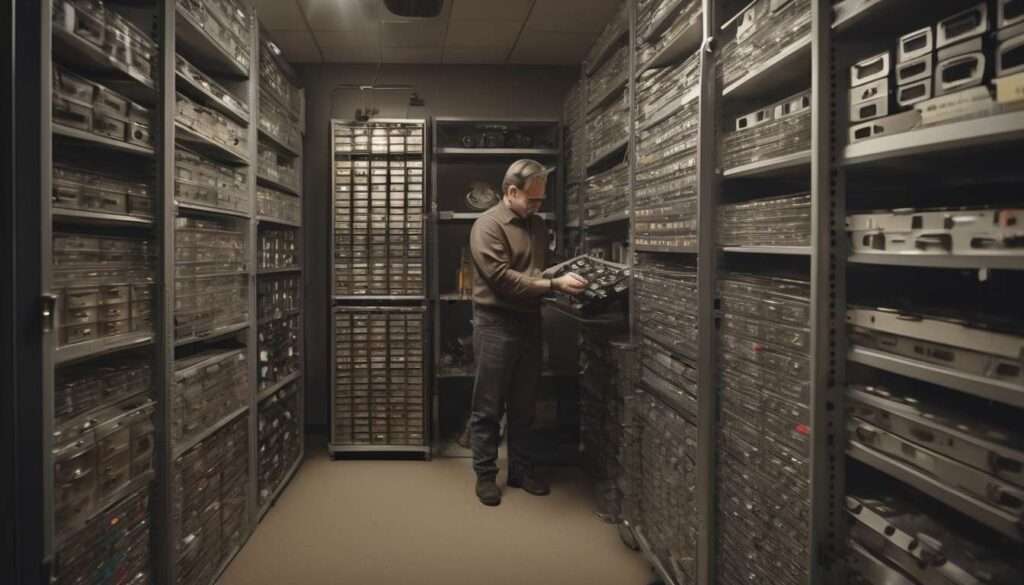
Growing concerns about disappearing cultural records force us to ask: what responsibility do we bear for preserving adult movie archives for future research?
As scholars, archivists, and concerned citizens, we confront legal, ethical, and technical challenges that complicate straightforward answers.
We must reconcile privacy and consent.
- Establish clear policies for informed consent and re-consent where possible.
- Respect performers’ requests for takedown, restricted access, or anonymization.
- Monitor and adapt to changing data-protection and obscenity laws that affect access and retention.
We must contend with stigma that devalues erotic media as serious cultural artifacts.
- Promote the scholarly value of erotic media for research into sexuality, gender, labor, and media history.
- Advocate to funders, cultural institutions, and review boards for recognition and support.
We must develop robust preservation methods before formats degrade or platforms vanish.
- Establish provenance and chain-of-custody documentation.
- Create and apply consistent metadata standards tailored to sensitive audiovisual materials.
- Implement secure, redundant storage (cold and warm backups) and format migration plans.
- Use access controls and tiered access models to balance preservation with privacy.
By treating these collections as part of broader audiovisual heritage, we enable future scholarship.
- Sociologists, historians, and media scholars can examine changing norms around sexuality, gender, and labor.
- Responsible curation supports reproducible research while protecting vulnerable individuals.
We must advocate for funding, interdisciplinary collaboration, and community-engaged practices.
- Build partnerships among archivists, legal experts, ethicists, scholar-practitioners, and performers.
- Involve affected communities in policy development and access decisions.
- Seek sustainable funding streams for long-term stewardship.
Only through these measures can we ensure these materials survive as responsibly curated resources for future cultural research.
Ethical Frameworks
When evaluating ethical frameworks for preserving adult movie archives, balance respect for performer consent, user privacy, and legal compliance.
We believe a community-centered approach helps honor contributors and researchers alike.
We prioritize documented consent at ingestion and ongoing verification for reuse.
- Embed consent metadata into digital preservation workflows so future stewards know rights and limits.
- Maintain records of provenance, terms of use, and any time‑limited or conditional permissions.
We commit to robust, transparent, and responsive access control.
- Role-based permissions to limit who can view or manage sensitive materials.
- Tiered discovery that separates metadata discoverability from access to full content.
- Review processes for sensitive or exceptional access requests.
We will anonymize user interactions and audit logs to protect privacy while retaining necessary provenance.
- Strip or pseudonymize personal identifiers from usage logs.
- Retain minimal provenance data required for accountability and preservation.
Our policies will be developed collaboratively with stakeholders.
- Invite performers, researchers, archivists, and community members to shape standards.
- Use inclusive consultation processes and record stakeholder inputs.
We will document decisions, provide clear channels for challenges, and update practices as norms evolve.
- Maintain public documentation of policies and recorded rationales for key decisions.
- Provide mechanisms for individuals to challenge use, request removal, or update consent.
- Regularly review and revise practices in response to legal, ethical, and community developments.
By centering consent, rigorous digital preservation methods, and accountable access control, we create archives that serve cultural research without sacrificing the dignity and safety of those represented or the communities who rely on respectful stewardship.
Legal Considerations
We must navigate a complex legal landscape that balances copyright, obscenity and age-verification laws, contract terms, and jurisdictional differences while protecting performers’ rights and researchers’ needs.
We recognize that clear policies help our community feel secure and included.
We’ll align digital preservation practices with applicable copyright exceptions, seek licenses where needed, and document provenance to support lawful research use.
We won’t ignore statutes that restrict distribution; instead we’ll implement access control measures that limit viewing to approved researchers and retain audit trails.
We’ll factor in contract clauses governing archival copies and negotiate terms that allow scholarly access while honoring performers’ consent records.
Cross-border research raises jurisdictional challenges, so we’ll maintain legal counsel familiar with multiple regimes and craft policies reflecting the strictest relevant requirements.
By treating legal compliance as part of stewardship, we protect archives and the people they represent.
We’ll communicate rules transparently to contributors and users, reinforcing trust and a shared commitment to preserving this material responsibly.
Consent and Privacy
We will require documented, revocable permission from performers and contributors and implement strict privacy safeguards to protect identifying information.
Informed consent is the foundation of our stewardship. Records must show who agreed, when, and under what terms, and we will honor revocation requests promptly.
We will treat consent as ongoing throughout digital preservation.
- We will design workflows that let people update permissions as contexts change.
- We will establish processes to propagate consent changes through storage, access, and access-logging systems.
We will minimize collected personal data and protect what we must keep.
- We will collect only the identifiers and metadata necessary for preservation and research.
- We will encrypt sensitive fields and segregate identifiers from descriptive files to reduce reidentification risk.
We will adopt granular access controls and auditing.
- Researchers with legitimate need can gain access without exposing unnecessary details.
- We will log and regularly review access to maintain trust and detect misuse.
We will involve contributors and affected communities in policy design.
- Governance will reflect lived experience and foster belonging.
- Community input will guide decisions about access levels, anonymization, and acceptable uses.
We will publish clear, plain-language explanations of how consent, privacy, and access control interact with preservation goals.
- Documentation will describe rights, procedures for revocation or modification, and data protections.
- We will provide an appeals process and support channels so everyone feels respected and secure when they participate.
Metadata Best Practices
Goal: Create clear, consistent metadata standards that balance discoverability, research value, and the privacy rights of performers and contributors.
Mandatory vs. optional fields
- Mandatory fields: title, production date, credited participants — these ensure basic discoverability and attribution.
- Optional fields: aliases, context notes — these allow inclusivity and richer description without forcing disclosure.
Consent and linkage
- Documented consent status: record consent for each person appearing.
- Link consent records to metadata: associate consent evidence with the metadata entry while not exposing sensitive details.
Interoperability and controlled vocabularies
- Adopt controlled vocabularies and persistent identifiers to enable interoperable discovery.
- Indicate restrictions and retrieval conditions in metadata so researchers and community members know what’s available and why.
Provenance, versioning, and preservation
- Embed provenance and versioning to support digital preservation and to trace curatorial decisions over time.
- Keep entries concise and auditable to facilitate review and trust.
Privacy, anonymization, and retention
- Use standardized schemas that support anonymization flags and retention policies.
- Respect privacy and legal obligations through schema features that allow masking, redaction, or restricted access.
Outcome: A shared, trustworthy metadata layer that is concise, permission-aware, and useful to researchers, performers, and the archival community.
Technical Preservation
Technical Preservation — goals and scope
We’ll define and implement robust file formats, storage strategies, and validation workflows that ensure long-term integrity, authenticity, and accessibility while minimizing risk to performers’ privacy.
File formats and codecs
- Choose open, well-documented codecs and container formats to ease digital preservation and future migration.
- Keep checksums, version histories, and provenance metadata tightly coupled to each file so every bit of evidence required to validate authenticity and history accompanies the object.
Storage and replication
- Replicate holdings across geographically separated, encrypted repositories to reduce catastrophic loss risk.
- Schedule routine fixity checks (e.g., periodic checksum verification) so bit rot is detected and repaired early.
Access control and auditing
- Design granular, auditable access controls that balance researcher needs with rights and consent constraints.
- Log requests and approvals to maintain accountability and a clear audit trail.
Ingest and validation pipelines
- Automate validation pipelines to verify:
- file formats are compliant,
- metadata completeness,
- encryption and access restrictions are applied as required.
- Block or flag ingests that fail validation for human review and remediation.
Operational practices and training
- Train staff in secure handling and anonymization techniques so everyone feels responsible for stewardship and understands privacy-preserving workflows.
- Document procedures and run regular exercises to keep skills current.
Governance and community
- Combine technical rigor with community-centered governance so preservation is reliable while respecting performers and supporting future cultural research.
- Embed consent and rights considerations into technical policies rather than treating them as afterthoughts.
Access Management
We will implement layered, auditable access management that enforces consent, provenance, and privacy requirements while enabling authorized research and controlled public use.
We will define clear roles and workflows so every team member and researcher knows their responsibilities.
Access control will be rule-based and logged, tying permissions to documented consent and metadata about provenance.
- This ensures sensitive items are restricted or redacted as required.
- Logs provide an auditable trail for every access decision.
We will integrate digital preservation systems with identity and entitlement services so access decisions persist across migrations and format changes.
We will provide secure, tiered viewing environments for different audiences.
-
- Researchers — full or controlled access depending on consent and provenance.
-
- Approved educators — curated access for teaching purposes.
-
- Anonymized public collections — redacted or aggregated materials to protect privacy.
We will maintain transparent appeal and review processes so community members feel respected and included.
We will conduct regular audits and use automated alerts to detect policy drift or unauthorized attempts.
-
- Automated monitoring for anomalous access patterns.
-
- Scheduled reviews to confirm policies match current consent statuses and legal requirements.
We will update policies when consent statuses or legal requirements change.
By centering consent, rigorous access control, and reliable digital preservation, we will build a trustworthy, inclusive archive that supports scholarship while protecting people and provenance.
Community Engagement
We will actively involve community members, performers, scholars, and advocates in shaping access, curation, and governance so the archive reflects their needs and respects their rights.
We will create participatory boards and regular consultations that center lived experience.
We will use clear consent frameworks so contributors control how material is used.
We will welcome diverse voices, build trust through transparent policies, and offer training so community members can take part in metadata creation, rights decisions, and outreach.
We will prioritize inclusive digital preservation practices that keep materials accessible over time while honoring privacy and safety.
We will design layered access control that balances research needs with personal protections, letting contributors choose levels of visibility.
We will document provenance and decision-making so governance is accountable and reversible.
We will publish plain-language guides and feedback channels, and host community-led workshops to strengthen stewardship skills.
By embedding mutual respect, shared responsibility, and practical safeguards, we will ensure the archive belongs to the people it represents and serves future cultural research ethically.
Funding and Partnerships
Funding and partnerships will be diverse and sustainable.
We will secure grants, philanthropic gifts, institutional contributions, and earned revenue to create a resilient financial base that sustains long-term digital preservation, honors consent commitments, and fosters a welcoming, accountable archive where everyone who belongs can participate and benefit.
We will build grant proposals and donor campaigns that emphasize:
- Consent and clear rights management.
- Cultural value of adult film archives.
- Transparent stewardship and ethical practices.
We will partner with academic institutions, community organizations, and privacy advocates to share resources, expertise, and responsibility. These partnerships will support digital preservation infrastructure, staff training, and community-led exhibitions.
Agreements will prioritize contributor agency and protective access controls.
We will negotiate frameworks that include:
- Clear consent processes for contributors.
- Rigorous access controls to protect participants and researchers.
- Shared governance so partners and community members have voice and oversight in spending, curation, and outreach.
We will measure impact through inclusive metrics.
Evaluation will focus on:
- Preservation outcomes.
- Equitable access.
- Ethical practices.
By pooling funding streams and establishing shared governance, we will create accountable, community-centered programming and stewardship that preserves materials responsibly while protecting and empowering contributors.
How do institutions handle the potential for reputational risk or donor backlash when their collections include adult material?
We’re mindful that including sensitive material can spark concern, so we proactively set clear policies, contextualize items, and communicate our educational mission.
We build donor agreements and review processes, offer restricted access where appropriate, and engage stakeholders openly to explain scholarly value.
We foster inclusive conversations, provide staff training, and spotlight responsible stewardship.
By being transparent and community-minded, we minimize backlash while honoring diverse research needs.
What strategies exist for safely digitizing fragile or deteriorating physical media that may contain explicit content without exposing staff to harm or distress?
Goal: Digitize fragile, explicit media safely and sensitively.
Remote assessment
- Conduct initial evaluations remotely whenever possible to limit direct exposure and handling.
- Use high-resolution photographs or detailed descriptions to determine condition and content sensitivity.
Non-invasive handling and digitization
- Use automated cleaning devices and non-invasive playback machines to minimize physical stress on media.
- Employ ergonomic supports and fixtures to stabilize items during digitization and prevent damage.
Protective measures for staff
- Require appropriate personal protective equipment (PPE) and provide training on its correct use.
- Rotate staff to reduce repeated exposure to potentially distressing content.
- Offer explicit opt-out options so staff can decline work involving particularly sensitive materials.
- Provide access to counseling and mental-health resources.
Access, privacy, and storage
- Establish clear access policies that define who can view original and digitized materials.
- Anonymize or redact metadata when needed to protect identities and privacy.
- Store digitized files in locked, encrypted systems with audited access logs.
Training and workplace culture
- Train all team members in trauma-informed handling, including recognizing signs of distress and de-escalation techniques.
- Foster a supportive, inclusive project culture where concerns can be raised without stigma.
Implementation checklist
- Create remote assessment protocol and documentation templates.
- Procure non-invasive digitization equipment and ergonomic supports.
- Draft PPE and rotation schedules; set up opt-out and counseling pathways.
- Define access, anonymization, and encryption standards; implement secure storage.
- Run trauma-informed handling training and establish feedback/reporting channels.
Outcome: A workflow that preserves fragile materials, protects staff wellbeing, and secures sensitive content while enabling responsible access.
Are there specialized training or certification programs for archivists who manage adult film collections to navigate the unique ethical, legal, and technical challenges?
Specialized training and certification options exist for archivists handling adult film collections, though they are often niche.
We’ll pursue professional archival degrees with targeted electives.
- Electives in privacy, intellectual property, and ethics.
- Coursework that addresses legal and moral responsibilities specific to sensitive audiovisual materials.
We’ll attend focused workshops and short courses.
- Workshops on consent and trauma-informed care.
- Training in digital preservation best practices for audiovisual formats and metadata.
We’ll join professional networks and seek legal briefings.
- Participation in groups such as SAA special interest groups and other relevant professional networks.
- Regular legal briefings to stay current on laws affecting access, copyright, and privacy.
We’ll obtain vendor and technical certifications for digitization and handling.
- Vendor certifications for digitization tools and platforms.
- Technical training in safe handling, quality control, and secure storage workflows.
We’ll build community knowledge through resource-sharing and mentorship.
- Share resources, best practices, and case studies across the profession.
- Establish mentorship and peer-support programs to provide ongoing guidance and emotional support.
Conclusion
You’ve outlined ethical, legal, and technical steps to preserve adult movie archives while respecting dignity and privacy.
Secure clear consent.
Apply robust metadata standards.
Use reliable digital preservation methods.
Keep materials accessible for future cultural research, while balancing open scholarly access with strict access controls.
Engage the community and secure sustainable funding.
Partner with institutions that share your values.
Document decisions transparently and commit to ongoing review so these archives remain responsible resources over time.